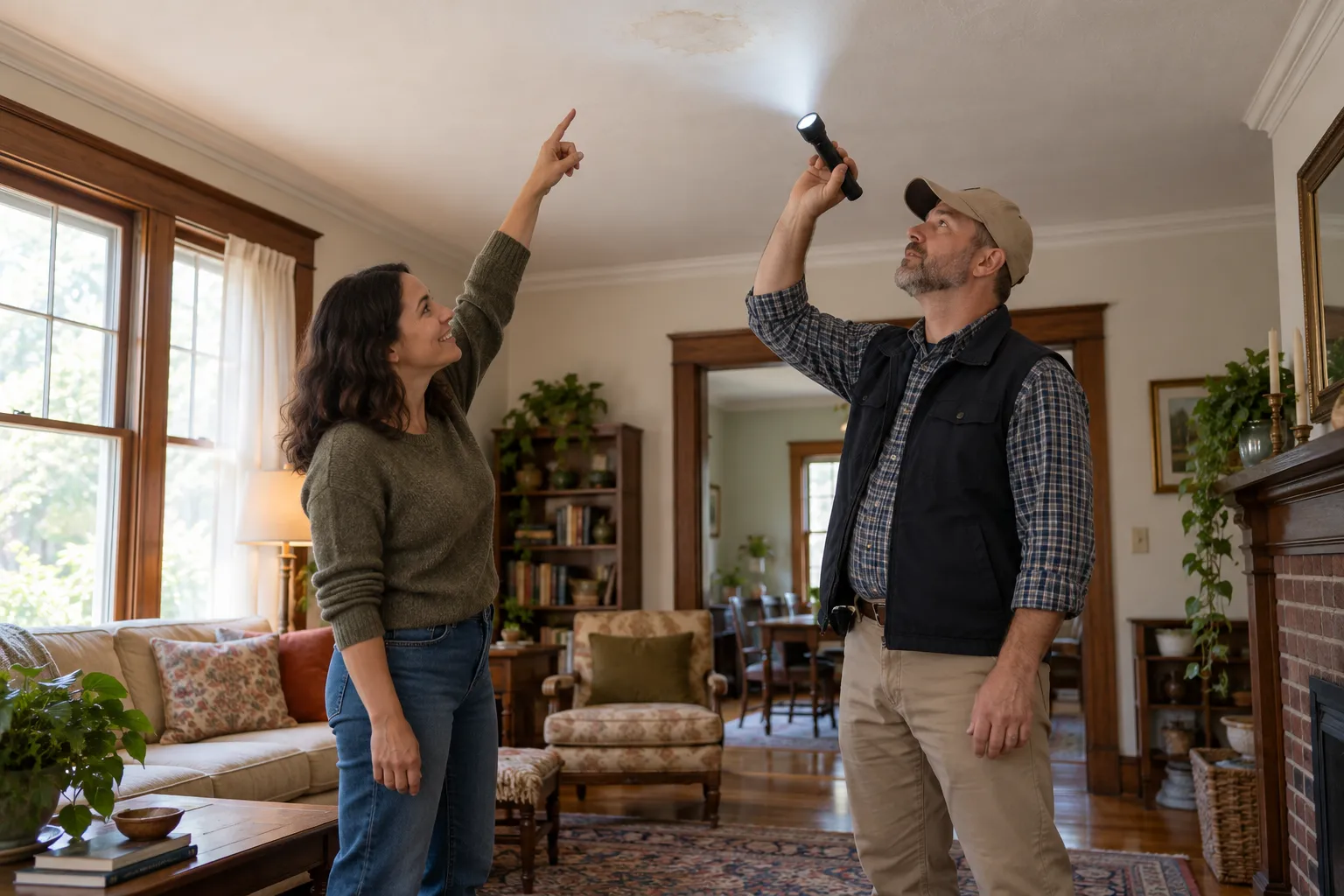
Small Mold Signs Are Easy to Miss
A musty smell in the basement. A faint stain in a ceiling corner. Paint that bubbles near a window. These small things are often the first hints of a mold problem, and they are the easiest stage to deal with.
Noiseeventually Mold Help is a referral service. It does not do the repair work itself. It connects homeowners in Green Lane, PA and the Green Lane area with independent local providers who handle mold remediation, mold inspection and testing, and black mold removal.
Here is the safety-first rule. Do act when you see early signs. Do not scrub, spray bleach or cut into walls before you know what you are dealing with. Disturbing mold can send spores into the air and carry the problem into clean rooms.
Start by requesting an estimate. Share what you see, where it is and how old your home is. A local provider can review the details and explain the next steps in plain language.
Request Service
Prefer to talk it through first? Request a callback to check provider availability in your part of the Green Lane area.
Request Service
How It Works
A referral service, not a contractor
Noiseeventually Mold Help helps homeowners find the right local help for mold. The providers in the network are independent businesses. They set their own schedules, prices and methods. Noiseeventually Mold Help makes the first step simpler.
How a request moves along
- You describe the problem and your home in the estimate request.
- Your request is matched with a provider in the network that serves your area.
- The provider reaches out, often to set up a visit.
- You review the written quote and decide. There is no obligation to hire.
Why acting early matters
Mold needs moisture. It grows on wood, drywall, insulation and even household dust. A spot the size of a coin is a very different job from a wall cavity full of growth. Acting early usually means a smaller scope, less disruption and fewer surprises behind the walls.
What to ask any provider
Ask how they find the moisture source. Ask whether they offer certified mold testing. Ask how they seal off the work area so spores stay put. Then ask for the plan and the price in writing. A solid provider explains clearly and does not rush you.
What Noiseeventually Mold Help does not do
Noiseeventually Mold Help does not inspect, test or remove mold. It does not set prices or make insurance decisions. Its job is to point you toward independent providers and give you clear, careful guidance while you decide.
Serving Green Lane and Beyond
Noiseeventually Mold Help focuses on homeowners in Green Lane, PA and across the Green Lane area. Housing here is a mix. Many streets have older single-family homes with full basements and stone or block foundations. Others have multi-family buildings and compact cape-style houses with finished attic rooms.
Each type of home has its own weak spots. Basements take on moisture from the soil. Attic knee walls trap damp air. Shared walls in multi-family buildings can carry a leak from one unit to the next.
Providers in the network know these building styles and the seasonal pressures that come with them: cold, snowy winters, spring snowmelt and the occasional coastal storm that pushes water where it should not go.
Coverage can differ from one provider to another. The simplest way to learn who can help at your address is to send a request with your neighborhood and a short description of the problem.
Request Service
What Local Homeowners Should Know First
Signs worth a closer look
Watch for a musty or earthy smell, especially in closed rooms. Look for stains that darken or spread, peeling paint, warped trim and damp-feeling drywall. Window sills that stay wet from condensation also deserve attention. Any of these can point to hidden moisture.
Do and do not, starting today
Do dry wet spots, run a dehumidifier and take photos. Do keep children and pets out of the area. Do not sweep, sand or scrub moldy surfaces. Do not mix cleaning chemicals. These steps protect your air while you wait for advice.
Older homes hide surprises
Older houses often have aging pipes, patched roofs, layers of past repairs and walls that were never designed to dry out. A tidy surface can cover a long-running leak. This is why a careful inspection matters more in an older house.
Stone and block foundations
Stone and block foundations can wick moisture through tiny gaps and old mortar. Basements may look dry in summer and feel damp in spring. Watch for white mineral crust, damp corners and stored boxes that smell stale.
Frost, thaw and snowmelt
Cycles of frost and thaw can crack foundation walls and flashing. When snow melts fast, water looks for any opening. Check basements, window wells and attic edges after each big thaw.
Coastal storms and humid air
Storm-driven rain can sneak past siding, windows and roof edges. Salty, humid air also slows drying. After a storm, check ceilings and wall bases and keep air moving.
Multi-family and cape-style homes
In multi-family buildings, a leak in one unit can show up in another. Talk with neighbors or the landlord early. In cape-style houses, check the low attic spaces beside finished rooms, where damp air often hides.
When testing helps
Testing can confirm what type of mold is present and how much, and it can show whether cleanup worked. It is not always needed. Ask the provider whether certified mold testing makes sense for your situation, or whether a visual inspection is enough.
Black mold, explained calmly
Dark mold is not always the toxic kind, and color alone does not tell you the type. Treat any dark growth with care. Keep your distance, limit airflow into the area and ask a provider about black mold remediation if it is widespread.
Costs and written quotes
In the U.S., an inspection often runs from a few hundred dollars to about a thousand. Remediation can range from several hundred dollars for a small area to several thousand for larger jobs. Prices vary a lot, so always get a written quote.
Start Your Request
Ready to take the next step? Send a short note about what you see, where you see it and roughly how old your home is. A provider in the network will follow up with questions and options.
Request Service
If you would rather talk first, request a callback to check provider availability, or write to contact@noiseeventually.garden.
Request Service